Calories to KJ Formula (Simple Conversion Explained with Examples)
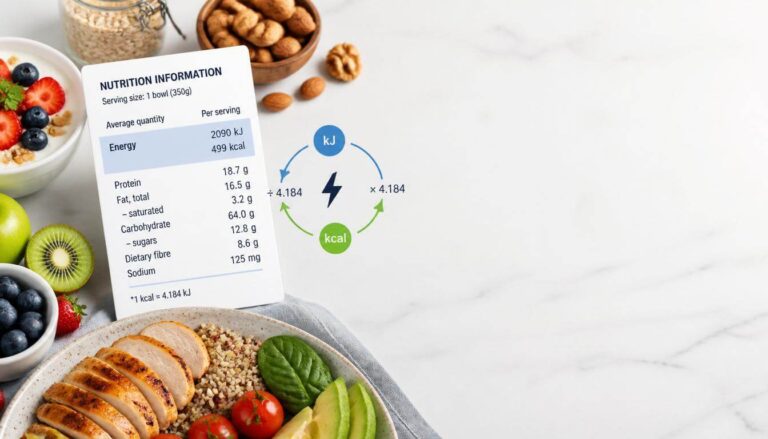
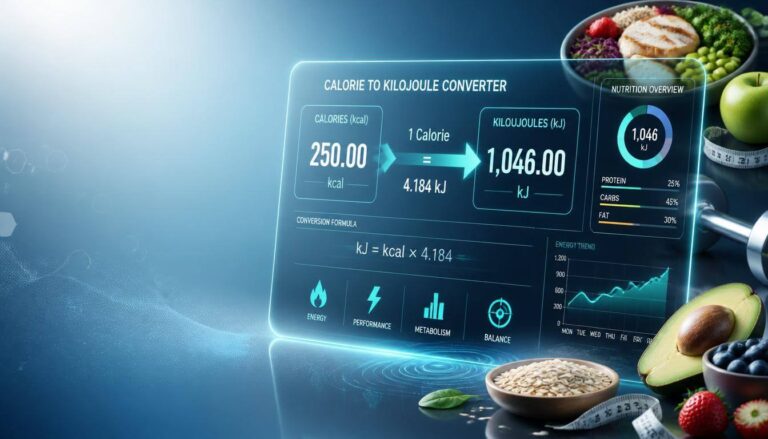
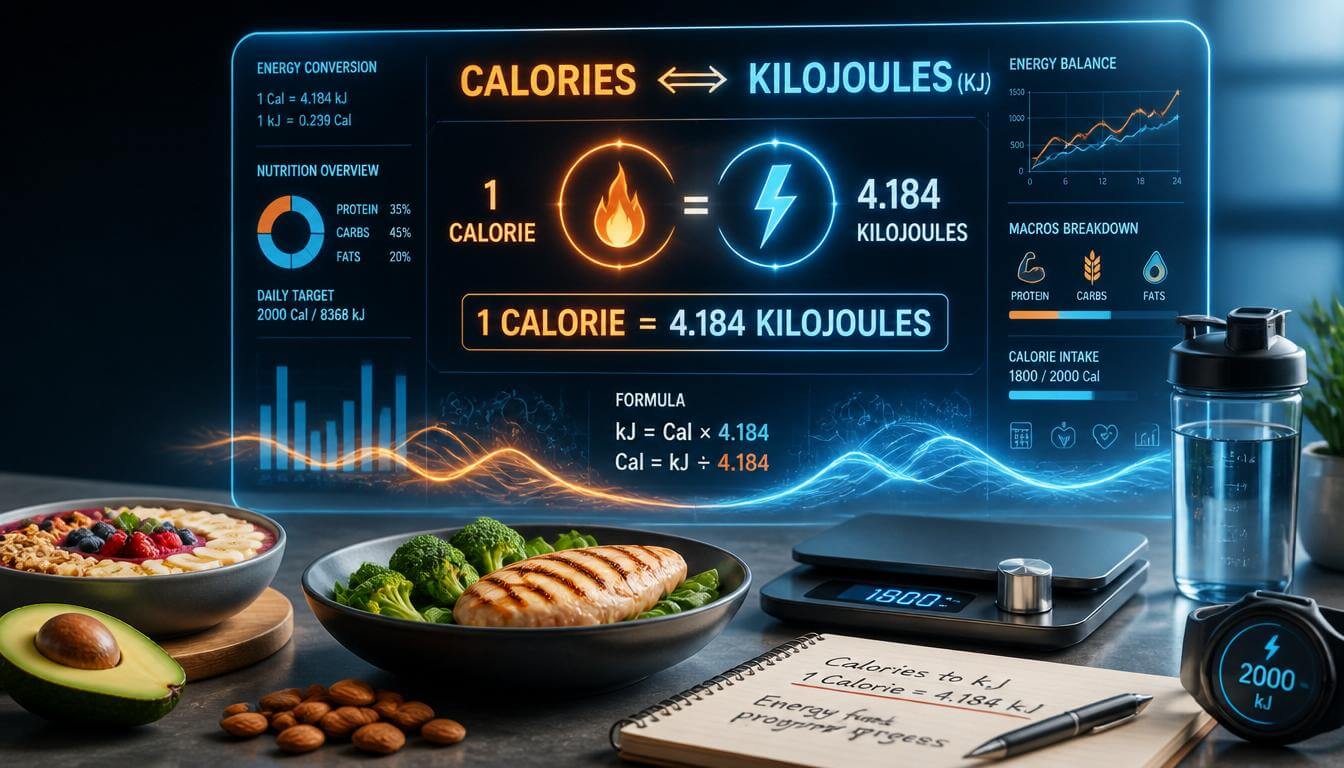
To convert calories (also called kilocalories, kcal, dietary calories or food calories) to kilojoules (kJ), multiply the number of calories by 4.184. That means every single calorie contains 4.184 kilojoules of energy. This easy formula (1 kcal = 4.18 kJ) can be used with a Calories to kJ calculator to convert nutritional energy given on food labels.
For example, if a meal contains 300 calories:
300 calories × 4.184 = 1255.2 kJ. So, 300 calories equals approximately 1255 kJ.
This conversion is commonly used when:
- reading nutrition labels,
- comparing imported food products,
- tracking energy intake,
- or using international fitness apps.
This simple calorie to kilojoule conversion helps people compare food energy values across different countries and nutrition systems.
Quick Calories to kJ Conversion Table
Here are some common conversions people look up regularly.
| Calories | Kilojoules | Calories | Kilojoules |
| 50 cal | 209 kJ | 100 cal | 418 kJ |
| 200 cal | 837 kJ | 300 cal | 1255 kJ |
| 500 cal | 2092 kJ | 2000 cal | 8368 kJ |
These values are rounded to the nearest whole kilojoule, which is how most nutrition labels display energy information.
How the Calories to kJ Formula Works
Calories and kilojoules both measure food energy. The process is simply a nutritional energy conversion between two different measurement systems.
A calorie is part of the traditional nutrition system, while kilojoules come from the SI (International System of Units) measurement system used in science and many food labelling regulations. Both are considered dietary energy units used to describe how much energy food provides.
The fixed conversion is:
Calories (kcal) ✖ 4.184 = kilojoules (kJ)
On food packaging, “Calories” and “kcal” generally mean the same thing. Because of this, many people search for quick kcal to kJ calculations when reading international food labels.
That’s why:
- 100 calories = 418.4 kJ
- 500 calories = 2092 kJ
- 2000 calories = 8368 kJ
Once you remember the 4.184 multiplier, converting becomes straightforward.
Real Food Examples Using the Formula
Most people do not convert random numbers; they convert actual meals. In everyday life, people usually want to convert food calories from packaged meals, restaurant items, and drinks into kilojoules.
Protein Bar
A typical protein bar may contain 220 calories.
220 × 4.184 = 920.48 kJ
That equals about 920 kJ.
Fast-Food Meal
A burger meal with fries and a soft drink can easily contain around 950 calories.
950 × 4.184 = 3974.8 kJ
That works out to nearly 4000 kJ for a single meal.
For context, that can represent a large portion of an average adult’s daily energy intake.
Bottled Iced Coffee
Many bottled coffee drinks contain around 180 calories.
180 × 4.184 = 753.12 kJ
So the drink contains roughly 753 kJ.
This is why energy values on coffee drinks sometimes appear much higher in kJ than people expect — the numbers themselves are larger, even though the actual energy is identical.
Two Pizza Slices
Two standard takeaway pizza slices may contain approximately 530 calories.
530 × 4.184 = 2217.52 kJ
That equals around 2218 kJ.
How to Convert kJ Back to Calories
If a food label only lists kilojoules, divide the kJ value by 4.184 to convert it back into calories.
Calories = kJ ÷ 4.184
Example:
1200 ÷ 4.184 = 287 Calories
So, 1200 kJ equals about 287 calories.
This reverse conversion is especially useful when:
- comparing international nutrition labels: It is especially helpful for understanding kJ nutrition labels commonly used in countries like Australia and New Zealand.
- logging meals into calorie-tracking apps,
- or checking restaurant nutrition information.
Common Mistakes in Calories to kJ Conversion
Using the Wrong Multiplier
The correct conversion factor is:
4.184
Small decimal mistakes can completely change the result.
For example:
- 0.418
- 41.84
- 418
are all incorrect for calorie-to-kJ conversion.
Confusing Calories With kcal
On nutrition labels:
- 1 Calorie = 1 kcal
This causes confusion because scientific calories and dietary Calories are technically different units, but food packaging treats them interchangeably.
Ignoring Serving Size
Many people convert the energy value correctly but overlook the serving size listed on the label.
For example, a snack package may show:
- 150 calories per serving,
- but contain 3 servings in total.
The full package would therefore contain:
450 × 4.184 = 1882.8 kJ
That equals nearly 1883 kJ, not 628 kJ.
Quick Mental Conversion Tips
For rough estimates, exact precision usually is not necessary.
Calories to kJ
This calorie conversion formula is easy enough to estimate mentally without needing a calculator every time. Multiply calories by:
- 4 for a fast estimate,
- or 4.2 for a closer estimate.
Example:
250 × 4 = 1000 kJ
The exact value is 1046 kJ, so the estimate is reasonably close for everyday use.
kJ to Calories
A quick shortcut is dividing by 4.
Example:
1600 ÷ 4 = 400 Calories
The exact result is slightly lower, but the estimate works well when checking food labels quickly.
Final Thoughts
The calories to kJ formula is simple once you remember the conversion factor:
1 kcal = 4.184 kJ
Whether a nutrition label shows calories or kilojoules, the actual food energy remains identical. Understanding the conversion makes it easier to compare packaged foods, track energy intake accurately, and interpret international nutrition labels without confusion. This type of food label energy conversion is particularly useful when comparing imported products or using global fitness apps
FAQs
About the Author

Nutrition & Energy Conversion Content Specialist (Australia)
Ethan Mitchell is a health and nutrition content specialist focused on simplifying energy conversions for everyday users in Australia. He creates clear and accurate content to help people understand and convert kilojoules to calories with ease. His work is based on trusted nutritional references and aligned with Australian food labeling standards, making complex energy information simple and practical for all users.